Pixel Art Patterns of Hearts
In a digital landscape saturated with sleek, minimalist aesthetics and ultra-modern sans-serif trends, there is a persistent, charming pull toward the nostalgic. Pixel Art Patterns of Hearts taps directly into that retro sensibility, offering a visual language that feels both familiar and fresh. This isn’t just about nostalgia for the sake of it; it’s about leveraging a specific cultural shorthand that resonates deeply with audiences who grew up playing arcade games, using early home computers, or engaging with 8-bit and 16-bit gaming cultures. The pattern collection provides a versatile toolkit for designers, marketers, and content creators looking to inject personality, playfulness, and a touch of vintage cool into their projects.
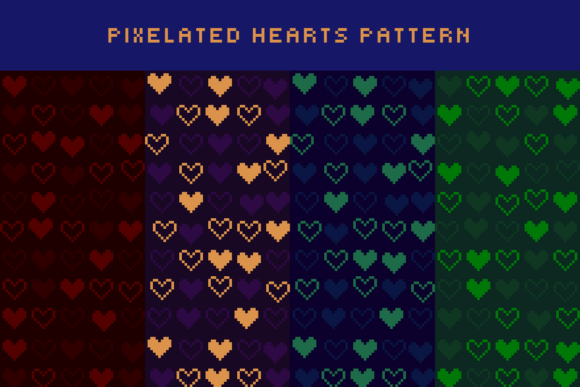
The core appeal of this asset lies in its execution. We are not dealing with crude, low-resolution artifacts here, but rather carefully constructed vector-based patterns that mimic the aesthetic of classic pixel art while maintaining crisp edges at any scale. The collection features four distinct colorways: a vibrant red, a calming green, a unique purple, and an energetic orange. Each variation offers a different emotional tone, allowing for precise alignment with brand identities ranging from bold and passionate (red) to serene and natural (green), mysterious and creative (purple), or lively and urgent (orange). These aren't merely decorative elements; they are foundational design assets that can define the visual hierarchy of a layout.
Visual Characteristics and Design Personality
When you examine the individual files included in the package—spanning SVG, EPS, PDF, JPG, and PNG formats—you notice an immediate attention to detail. The resolution of 3750×3750 pixels ensures that these patterns remain sharp even when printed on large-format materials like banners, packaging, or wall murals. This high-fidelity reproduction is crucial for professional applications where clarity cannot be compromised. The heart motif itself is stylized through the lens of pixelation, breaking down organic curves into a grid of uniform squares. This geometric abstraction creates a rhythm that is pleasing to the eye, balancing chaos with order.
The personality of Pixel Art Patterns of Hearts is distinctly playful yet structured. It avoids the potential cheesiness often associated with traditional heart symbols by grounding them in a digital, blocky framework. This makes the pattern suitable for a wider range of contexts than one might expect. While it naturally fits themes related to Valentine’s Day, romance, or affection, its retro-gaming roots allow it to bridge into tech, gaming, and youth culture niches. The use of secondary colors like blue-green (often interpreted as teal or cyan in modern palettes) adds a layer of sophistication, preventing the design from feeling too juvenile. It strikes a balance between whimsical and professional, a sweet spot that many brand strategists strive for when trying to appear approachable without losing authority.
Strategic Applications Across Industries
The versatility of this pattern set allows it to be deployed across various sectors, each leveraging the visual cues differently. For entrepreneurs and small business owners, particularly those in the craft, hobby, or lifestyle spaces, these patterns offer an instant way to establish a cohesive brand identity. Imagine a boutique selling handmade jewelry or candles using the red or pink variations for packaging inserts, or the green variant for eco-friendly product lines. The consistency provided by repeating seamless patterns helps build recognition, turning simple boxes or bags into memorable brand touchpoints.
In the realm of web design and social media graphics, these assets serve as powerful background elements or overlay textures. A blogger creating content around retro gaming, pop culture analysis, or even a lighthearted relationship advice column could use the purple or orange patterns to break up text-heavy sections. The patterns add visual interest without distracting from the primary content, acting as a subtle anchor for the reader’s eye. For publishers and editorial designers, incorporating such creative fonts and patterns into magazine layouts or ebook covers can signal a shift in tone, indicating that the content within is fun, engaging, or targeted toward a younger demographic.
Marketing campaigns benefit significantly from the emotional resonance of hearts combined with the novelty of pixel art. Traditional heart motifs can sometimes feel overused or cliché. By rendering them in a pixelated style, marketers introduce a layer of irony and modernity that appeals to adults aged 20–50 who appreciate design wit. This is particularly effective in digital advertising, where standing out in a crowded feed requires more than just standard imagery. A well-executed pixel art pattern can halt the scroll, inviting users to engage with the ad or landing page.
Technical Advantages and Workflow Integration
From a practical standpoint, the inclusion of multiple file formats addresses common workflow bottlenecks for designers. The SVG and EPS vector files are indispensable for print production and scalable logo design, ensuring that no matter how much you zoom in or resize the graphic, the edges remain perfectly crisp. This is vital for commercial font usage where quality control is paramount. Meanwhile, the JPG and PNG files provide ready-to-use raster options for quick mockups, social media posts, or web integration where vector manipulation isn’t necessary. The PDF inclusion further aids in direct printing workflows, reducing the need for conversion steps that can sometimes introduce errors or compatibility issues.
Evaluating project fit involves considering the weight and density of the pattern. Because Pixel Art Patterns of Hearts is a display-oriented element, it works best when used as a supporting actor rather than the lead. Pairing it with clean, modern typography—such as a simple sans serif font for body text—creates a compelling contrast. The complexity of the pixel art draws the eye, while the simplicity of the accompanying text ensures readability. This principle of visual hierarchy is essential in editorial design and packaging design, where information must be communicated clearly amidst decorative elements.
Readability considerations also extend to color choice. The red and orange variations tend to advance visually, making them ideal for call-to-action areas or highlighting key information. The green and purple variants recede slightly, making them better suited for backgrounds or larger surface areas where they provide texture without overwhelming the viewer. When testing font pairings, it is advisable to keep the surrounding typography neutral. Let the pixel art speak for itself; adding ornate scripts or heavy serifs next to it can create visual clutter that confuses the audience rather than engaging them.
Commercial Licensing and Professional Use
For professionals, understanding the licensing terms of any design asset is non-negotiable. Using a premium font or pattern set commercially requires adherence to specific guidelines to protect both the creator’s intellectual property and your own legal standing. Typically, such packages allow for use in end products sold to clients, including merchandise, websites, and marketing materials, but may restrict resale of the raw asset itself. Always review the license agreement to ensure compliance, especially if you are producing high-volume items or using the pattern in a way that implies endorsement by the original artist.
Ultimately, Pixel Art Patterns of Hearts represents more than just a collection of images; it is a strategic tool for enhancing brand perception. In an era where consumers crave authenticity and connection, tapping into shared cultural memories through design can foster a deeper engagement. Whether you are a seasoned designer looking to expand your asset library or a small business owner aiming to elevate your visual presence, this pattern set offers a blend of nostalgia, technical precision, and creative flexibility. By integrating these elements thoughtfully, you can create designs that not only look good but also resonate emotionally, driving recognition and loyalty in a competitive market.